From June 8 to 12, the 23rd World Congress of Soil Science (WCSS), renowned as the "Olympics" of the global soil science community, was held in Nanjing, China. This marked the first time in nearly a century since its inception that this prestigious international academic event was hosted in China.
The congress was jointly organized by the International Union of Soil Sciences (IUSS) and the Soil Science Society of China, and hosted by the Institute of Soil Science, Chinese Academy of Sciences. Under the theme "Soil and the Shared Future for Humanity," the event brought together nearly 3,000 soil scientists, experts, representatives of relevant international organizations, and corporate delegates from over 100 countries and regions. Professor Li Liping and Dr. Huang Xinjun from the School of Environmental Engineering, Henan University of Technology, attended the congress and delivered oral presentations at parallel sessions.
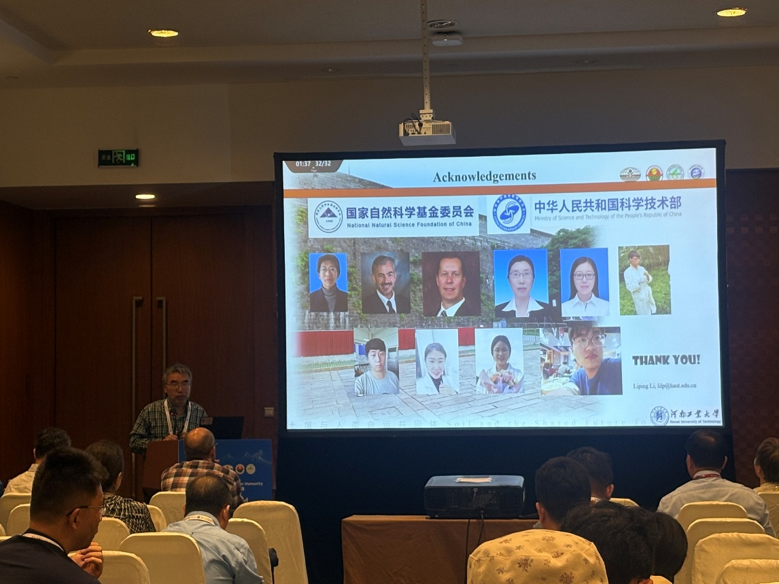
Professor Li Liping presented a talk titled "Heavy metals migration from soil to animal/human in heavy metal contaminated areas: Fate and risk of legacy Pb and Cd." Focusing on the ecological health and food chain safety in heavy metal-contaminated regions, Professor Li systematically elucidated the migration control mechanisms and health risk assessment models of legacy lead (Pb) and cadmium (Cd) in the "soil–animal/human" system. His research provides important theoretical foundations for the safe utilization of contaminated farmland and the establishment of health barriers for humans and livestock.
Dr. Huang Xinjun presented a talk titled "Field-scale Assessments of Subsoil Compaction and Soil Structure Functions." Addressing the core issue of cropland quality improvement, Dr. Huang shared recent research progress on the impacts of subsoil compaction on soil structure and its ecosystem service functions at the field scale. His work offers an international perspective and scientific support for the protection and improvement of soil structure in the context of global climate change and mechanized farming.
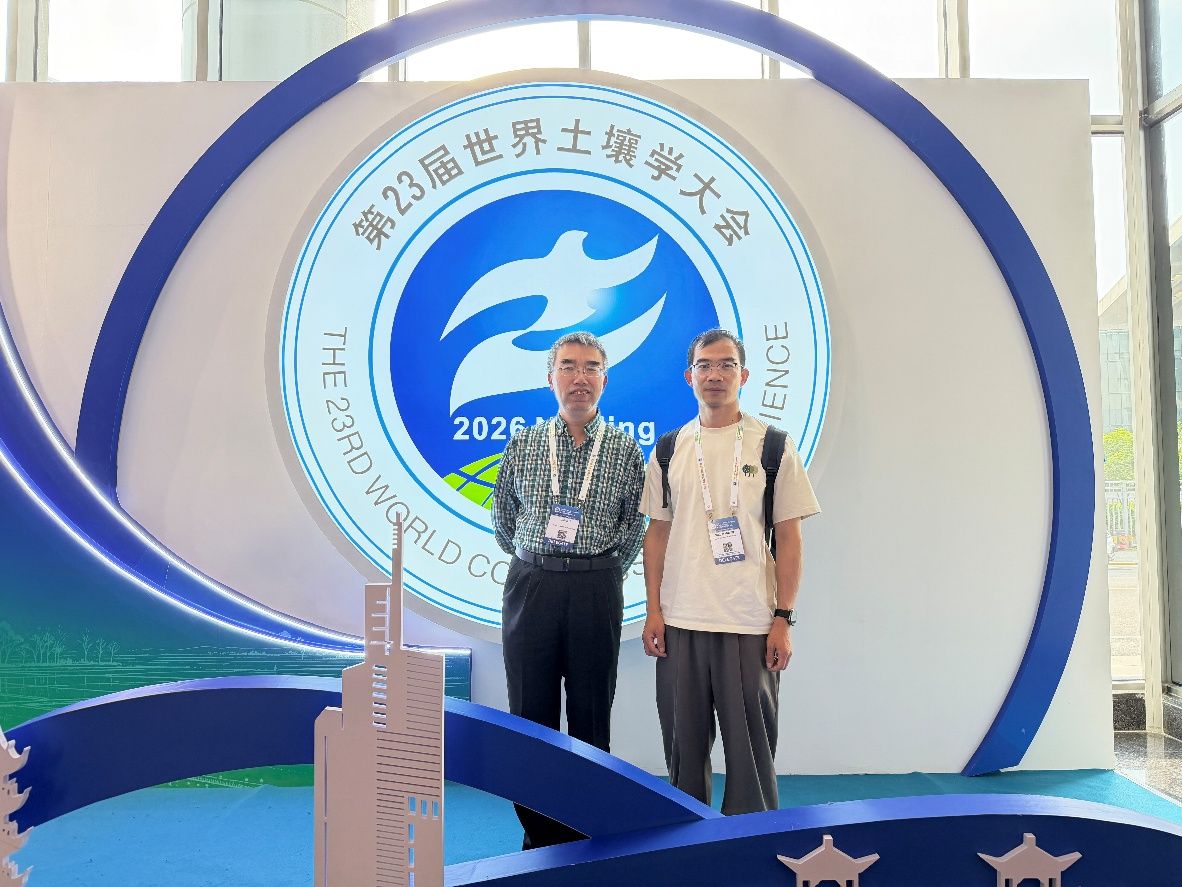
During the congress, Professor Li Liping and Dr. Huang Xinjun engaged in extensive exchanges with peers from the United States, Germany, and various Chinese research institutions. The participation and high-level academic presentations by scholars from the School of Environmental Engineering, Henan University of Technology, not only showcased the School's research achievements in areas such as soil heavy metal pollution control and cropland quality improvement to the domestic and international academic community but also helped broaden the international academic horizons of its researchers. This event has laid a solid foundation for future high-level, international research collaborations focused on cropland quality improvement, safe utilization of polluted farmland, and green agricultural development.
Text by Xinjun Huang, photos by Xinjun Huang and Liping Li, reviewed by Liping Li, approved by Dongjin Wan




 地址:河南省郑州市高新区莲花街100号
 邮编:450001
 邮箱:hjgcxy@haut.edu.cn
