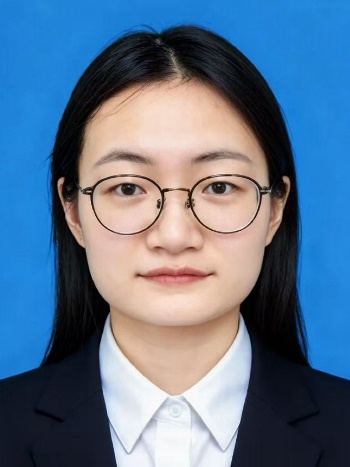
王群,副教授,硕士生导师,日本筑波大学环境学博士,电子邮箱:wangqun0909@163.com
研究方向:
围绕气候变化与大气污染协同治理,重点开展以下研究:
1. 交通能源系统碳排放核算、生命周期评价与脱碳管理
2. 可再生能源及氢基替代燃料可持续发展潜力评估
3. 能源—经济—环境多维耦合建模与低碳政策优化
主要学习及工作经历:
Ø 2025.12-至今 河南工业大学,副教授
Ø 2020.11-2025.12 河南工业大学,讲师
Ø 2017.9-2020.9 日本筑波大学,生命与环境科学学院,持续环境学研究,博士(国家留学基金委公派留学奖学金)
Ø 2017.12-2019.3 日本产业技术综合研究所(AIST),安全科学部门,排出暴露解析小组,研究助理
Ø 2014.9-2017.7 郑州大学,化学与分子工程学院,环境科学专业,硕士
Ø 2010.9-2014.7 华北水利水电大学,环境与市政工程学院,环境工程专业,学士
主持及参与科研项目:
1. 国家自然科学基金青年科学基金项目(C类),双碳目标下道路交通部门温室气体动态排放及减排路径优化研究,42207542,主持
2. 深圳市道路运输典型类型车辆温室气体排放本地化因子构建及应用项目,主持
3. 国家自然科学基金,面上项目,二氧化碳气氛中生物质与塑料共热解交互作用和产物演化机制研究,52276181,参与
4. 河南省“十四五”节能双控目标匡算及实施路径研究,2020,参与
5. 氨能源体系风险评价,2017.12-2019.3,日本科学技术振兴机构 (JST),参与
6. 中原城市群及周边地区大气复合污染联防联控技术集成与应用示范,国家重点研发计划,2017,2017YFC0212400,参与
7. 郑州市环境监测中心站大气细颗粒物源解析,2016,[2015]C009,参与
8. 中原城市群大气复合污染综合防控,2016,HN2016-149,参与
9. 郑州市环境监测中心站大气细颗粒物源解析,2015,[2014]C-21,参与
10. 中原经济区大气细颗粒物来源及控制,2014,201409010,参与
科技奖励:
[1] 王群 (5/10),多元生物质协同热转化关键技术及多维碳足迹评价,河南省科学技术进步奖二等奖
发表论文:
1. Wang Q, Li Z, Wang Z, et al. Life cycle perspective on biochar-catalyzed co-pyrolysis of biomass and plastic waste across multiple treatment scenarios[J]. Bioresource Technology, 2026: 133941.
2. Wang Q, Li X, Xue M, et al. Evaluating the impact of battery electric vehicle and hydrogen fuel cell vehicle deployment on emissions in China's light-duty passenger vehicle fleet: A scenario-based well-to-wheel analysis[J]. Journal of Cleaner Production, 2025, 535: 147124.
3. Xu, N., Wang, Z., Chen, G., Wang, Q., Li, Z., Lei, T. (2025). Effect of torrefaction on the co-pyrolysis of pinewood with PET and HDPE: Impacts on products distribution. Journal of the Energy Institute, 102278.
4. Yu F, Zhong Z, Wang Q, Liao S, Zhu M, Sha Q, Liu J, Zheng J. 2022. Characterizing the particle number emissions of light-duty gasoline vehicles under different engine technologies and driving conditions[J]. Environmental Research, 213: 113648.
5. Wang Q., Xue M.*, Lin B., Lei Z., Zhang Z., 2020. Well-to-wheel analysis of energy consumption, greenhouse gas and air pollutants emissions of hydrogen fuel cell vehicle in China, Journal of Cleaner Production. 275, 123061.
6. Wang, Q., Dong, Z., Guo, Y., Yu, F., Zhang, Z., Zhang, R.*, 2020. Characterization of PM2.5-bound polycyclic aromatic hydrocarbons at two central China cities: seasonal variation, sources, and health risk assessment. Archives of Environmental Contamination and Toxicology, 78(1), 20-33.
7. Xue, M.*, Wang, Q., Lin, B., Tsunemi, K., 2019. Assessment of ammonia as an energy carrier from the perspective of carbon and nitrogen footprints. ACS Sustainable Chemistry & Engineering, 7(14), 12494-12500.
8. Wang Q., Jiang N., Yin S., Li X., Yu F., Guo Y., Zhang R.*, 2017. Carbonaceous species in PM2.5 and PM10 in urban area of Zhengzhou in China: seasonal variations and source apportionment. Atmospheric Research, 191: 1-11.
9. Xue, M.*, Wang, Q., Lin, B., Tsunemi, K., 2020.Mitigation of greenhouse gas and reactive nitrogen from the Japanese car fleet. Journal of Cleaner Production. 277., 123440.
10. Yu, F., Wang, Q., Yan, Q., Jiang, N., Wei, J., Wei, Z., Yin, S.*, 2018. Particle size distribution, chemical composition and meteorological factor analysis: a case study during wintertime snow cover in Zhengzhou, China. Atmospheric Research, 202, 140-147.
11. Jiang, N., Guo, Y., Wang, Q., Kang, P., Zhang, R.*, Tang, X., 2017. Chemical composition characteristics of PM2.5 in three cities in Henan, central China. Aerosol and Air Quality Research, 17(10), 2367-2380.
12. Jiang, N., Li, Q., Su, F., Wang, Q., Yu, X., Kang, P., Zhang, R.*, Tang, X., 2018. Chemical characteristics and source apportionment of PM2. 5 between heavily polluted days and other days in Zhengzhou, China. Journal of Environmental Sciences, 66, 188-198.
13. Wang, S., Yan, Q., Yu, F., Wang, Q., Yang, L., Zhang, R.*, Yin, S., 2018. Distribution and source of chemical elements in size-resolved particles in Zhengzhou, China: Effects of regional transport. Aerosol and Air Quality Research, 18, 371-385.



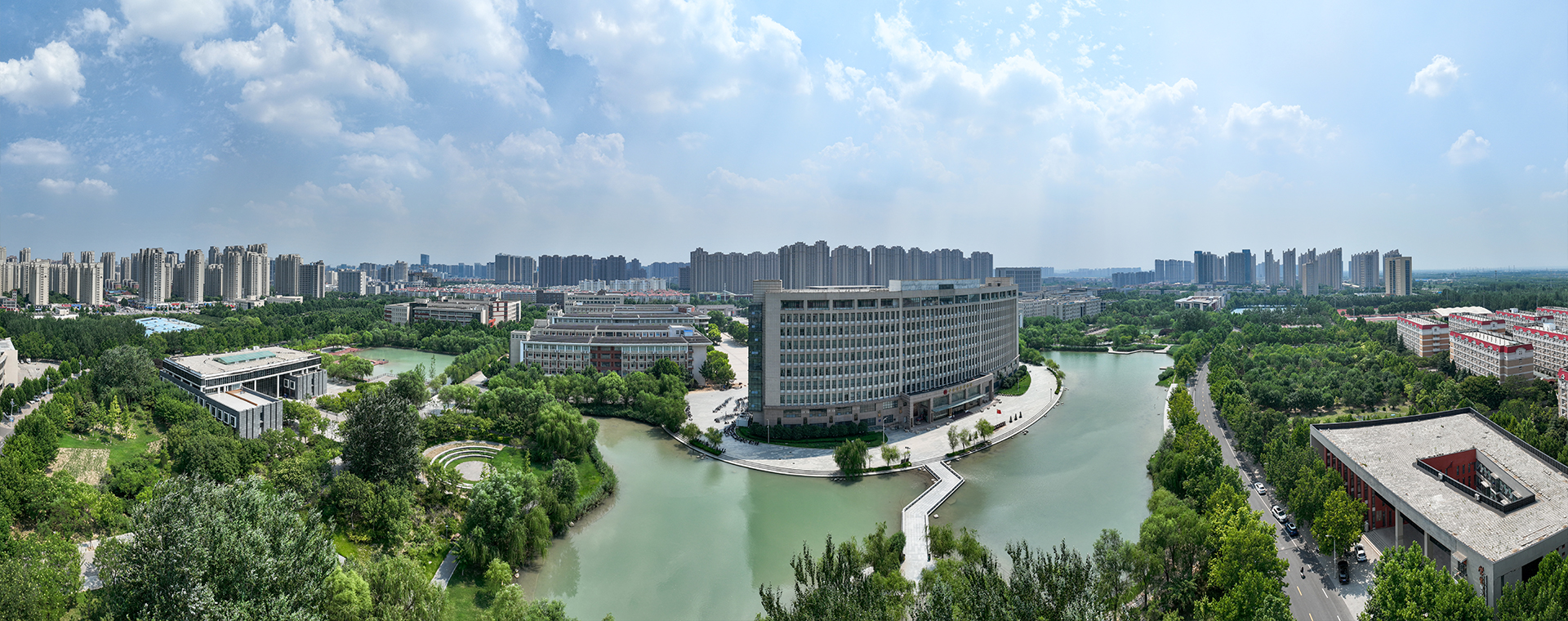

 地址:河南省郑州市高新区莲花街100号
 邮编:450001
 邮箱:hjgcxy@haut.edu.cn
